Why Play-Based Learning Is the Foundation of Great Preschool Education
By CMR School, Lalgadi Malakpet
Ask any early-childhood educator what the most powerful tool in a young child's learning arsenal is, and the answer is almost always the same: play.
Yet many parents — particularly those who are competitive about their child's education — feel uneasy about a school day that looks "too playful." If a classroom is full of building blocks, puppets, and sand trays, is any real learning happening?
The answer is a resounding yes. Here is why play-based learning is not just acceptable in preschool — it is the gold standard.
What Is Play-Based Learning?
Play-based learning is an educational approach where structured and unstructured play is used as the primary vehicle for learning. It does not mean children are left to do whatever they want all day. It means teachers design rich environments and activities where children learn through exploration, interaction, and imagination.
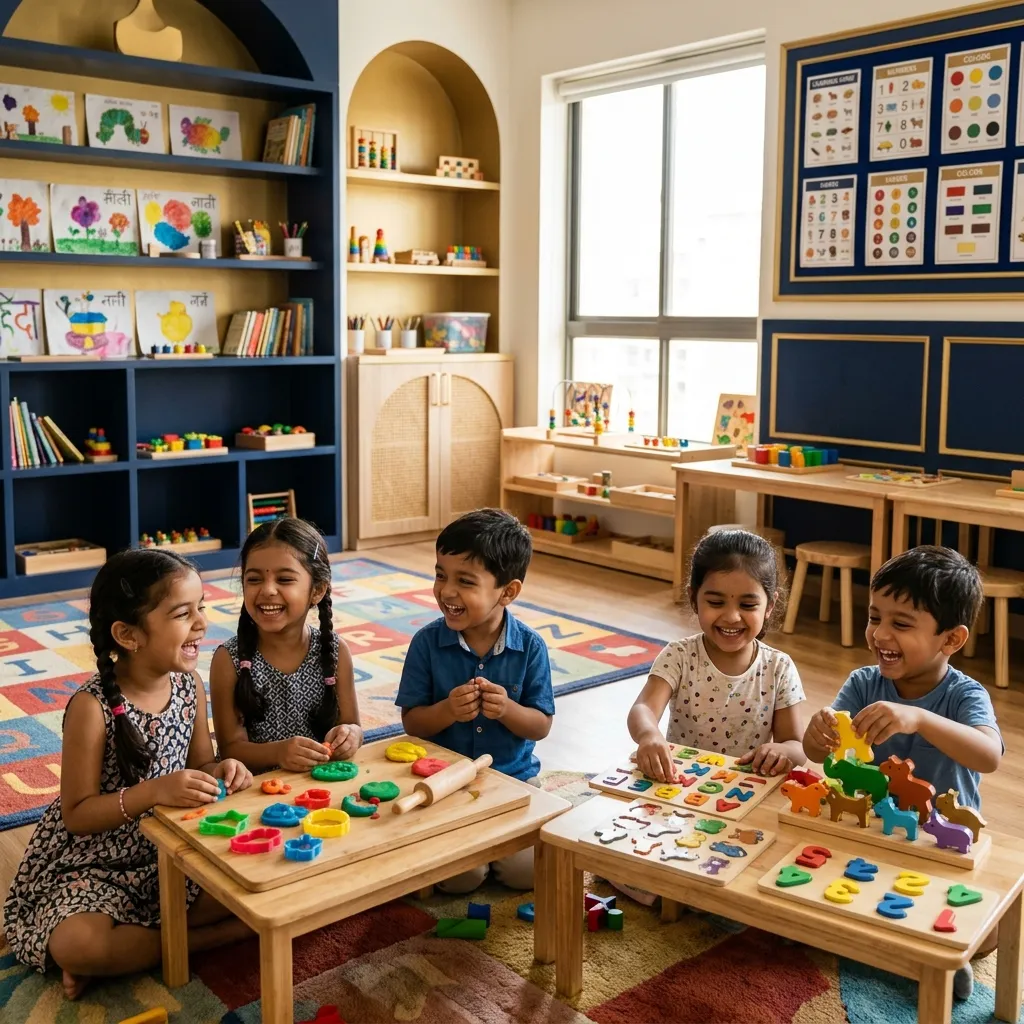
In a play-based classroom, you might see children:
- Building structures with blocks — and learning physics, maths, and spatial reasoning
- Role-playing shopkeeper and customer — and practising language, maths, and social skills
- Painting or moulding clay — and developing fine motor skills and creative expression
- Sorting objects by colour and size — and building early maths foundations
- Listening to a story and acting it out — and strengthening language, memory, and empathy
Why Play-Based Learning Works for Young Children
1. It Matches How Young Brains Learn
Children under six learn best through sensory experience and action, not abstract instruction. The brain is wiring itself rapidly during these years, and play provides exactly the kind of multi-sensory, emotionally engaged input that builds strong neural connections.
2. It Builds Social and Emotional Skills
Play — especially with other children — is how young children learn to negotiate, share, cooperate, handle frustration, and understand others' feelings. These emotional intelligence skills are predictors of long-term success in school and life.
3. It Develops Language Naturally
When children play, they talk — a lot. They narrate, negotiate, question, and describe. Rich play environments led by skilled teachers are among the best language development tools available for young children.
4. It Builds Intrinsic Motivation
Children who learn through play develop a genuine love of learning — because they associate it with curiosity, joy, and discovery. This intrinsic motivation is one of the strongest predictors of academic engagement in later years.
5. It Supports Physical Development
Fine motor skills (cutting, drawing, threading) and gross motor skills (running, balancing, climbing) are critical at this age and develop naturally through play. These skills underpin later abilities like writing, sports, and coordination.
Play-Based vs Drill-Based Preschools: What to Watch Out For
Some preschools in India still rely heavily on rote drills, worksheets, and memorisation for very young children. While structured learning has its place, too much drill-based instruction before age 6 can undermine a child's natural curiosity and create school anxiety.
Signs of a good play-based preschool:
- Children look happy and engaged when you visit
- Classrooms are colourful, hands-on, and full of materials children can touch and use
- Teachers facilitate rather than lecture
- There is a mix of structured activities and free play
- Assessment is through observation and documentation, not formal tests
How CMR School, Lalgadi Malakpet Approaches Early Years Learning
At CMR School, Lalgadi Malakpet, our pre-primary programme is built on the belief that the early years are too important to waste on drills and worksheets. Our Rainbow Classrooms — purpose-built, colourful, stimulating learning spaces — are designed to make every young child feel excited to come to school.
Our early-years approach includes:
- Activity-based CBSE learning — concepts introduced through play, stories, and exploration
- Dedicated early-years teachers — patient, trained, and child-centred
- Outdoor learning time — our 4-acre green campus gives children real space to move, explore, and grow
- Social-emotional foundations — circle time, collaborative play, and mindful morning routines
We admit students from Nursery through Class VIII. Admissions for 2026-27 are now open.
Frequently Asked Questions
At what age should a child start formal academic learning?
Most child development experts recommend that formal academic instruction (reading, writing, maths worksheets) is best introduced gradually from age 5–6. Before that, play-based learning builds the foundations far more effectively than early formal drilling.
Should I be worried if my child's preschool "just plays" all day?
A well-structured play-based programme is intentional — there is rich learning happening even when it looks informal. The question to ask your child's teacher is: "What are the learning outcomes you are observing this week?" A good teacher will have clear, articulate answers.
How do I support play-based learning at home?
Simple, open-ended toys — blocks, clay, puzzles, drawing materials, books — support play-based learning better than electronic devices or highly structured toys. Reading aloud to your child daily is one of the single most powerful things you can do.
Does play-based learning prepare children for competitive primary school admissions?
Yes. Children from strong play-based programmes typically show better focus, language skills, and emotional regulation — all of which help them succeed in primary school assessments and environments.
Conclusion
Play is not the opposite of learning. For young children, play is learning — the most natural, effective, and joyful form of it. The best gift you can give your preschooler is a school that understands this and designs every day accordingly.
If you are exploring preschool options near Shamirpet or Lalgadi Malakpet, we would love to show you our early-years environment at CMR School. Enquire about nursery admissions here or call us to schedule a visit.
Estimated read time: 5 minutes