The Value of Outdoor Sports in Building Resilience and Coping with Failure
By CMR School, Lalgadi Malakpet
A sports field teaches lessons that a classroom podium never can. At CMR School, Lalgadi Malakpet, we view sports not just as a recreation break, but as a vital training ground for character, focus, and emotional strength.
Learning through competition — students working as a team during a football match on the school sports field.
For many parents, physical fitness is the primary advantage of sports. While active play is critical for physical health, the emotional benefits are just as profound. In an era where children face high academic expectations, learning how to handle competition, deal with setbacks, and recover from defeat on the sports field is one of the most effective ways to build resilience in children, preparing them for the challenges of life.
Why Coping with Defeat is a Crucial Life Skill
We cannot protect our children from setbacks, but we can teach them how to respond. In sports, someone always loses. Experiencing a lost match or a missed shot teaches children that failure is not a permanent state, but a step in the learning process. This understanding is the foundation of emotional resilience, helping students navigate academic and personal challenges confidently.
How CMR School Integrates Sports and Character Building
Our physical education curriculum is designed to support every student's growth, regardless of athletic ability. Here are the core pillars of our physical education CBSE programme:
1. Structured Team Sports and Cooperation
We emphasize team games like football, basketball, and cricket. Working in teams teaches children to communicate, support peers during errors, and celebrate group success.
2. The "Honest Effort" Recognition
We recognize and praise effort, strategy, and sportsmanship rather than just winning. A student who helps an opponent up or cheers for their team after a loss is celebrated.
3. Guided Post-Game Reflections
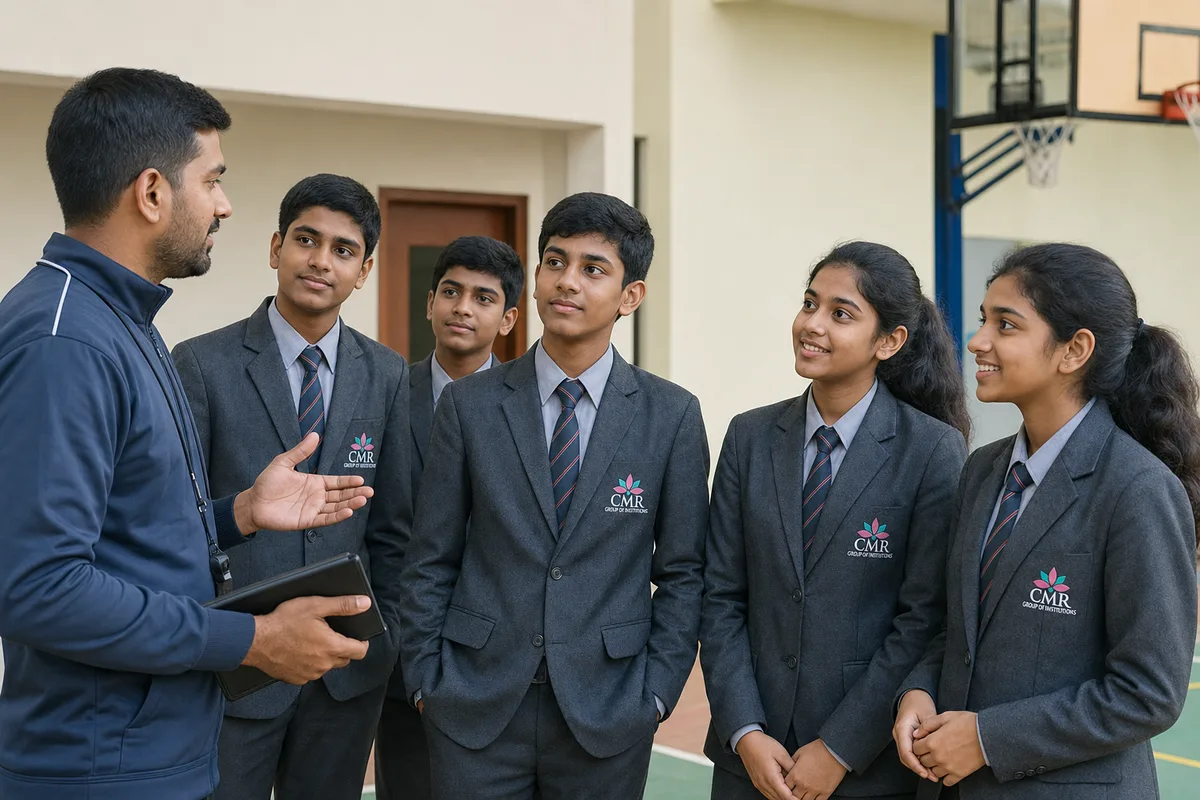
After matches, our physical education instructors lead brief discussions: "What did we do well? What can we practice to improve next time?" This shifts focus from the scoreboard to personal growth.
4. Rotational Team Captaincy
We rotate leadership roles, giving every student the opportunity to manage team strategies, resolve conflicts, and build communication skills under pressure.
How Parents Can Foster Resilience Through Sports at Home
You can reinforce these positive lessons through your support at home. During sports events, focus your post-game questions on enjoyment and effort rather than the score: "Did you have fun? What was your favorite play?" Avoid blaming referees or teammates for a loss; instead, help your child process disappointment: "It's okay to feel upset about losing, but I am proud of how you kept playing hard until the end." Play board games or family sports together, demonstrating how to be a gracious winner and a resilient loser.
Conclusion
The sports field is a laboratory for character development. By welcoming sportsmanship, team cooperation, and active reflection, we ensure our students build the physical health and emotional strength to succeed. At CMR School, Lalgadi Malakpet, our physical education programme is designed to prepare students for the game of life.
Enquire About Admissions 2026-27 — CMR School, Lalgadi Malakpet
Admissions are open for the academic year 2026-27 (Nursery to Class VIII). Book your campus visit or fill out an online enquiry today.
Apply Now →Frequently Asked Questions (FAQs)
1. What are the main sports education benefits for academic learning?
Sports improve cardiovascular health, increasing blood flow to the brain, which boosts concentration, memory, and cognitive focus. They also teach self-discipline, time management, and reduce stress before exams.
2. My child is not athletically inclined and dislikes sports. What should I do?
Do not force them into highly competitive teams. Encourage individual or recreational activities like swimming, cycling, yoga, or basic running games. Focus on personal improvement and fun rather than competition.
3. How does physical education CBSE align with overall student evaluation?
The CBSE curriculum includes Health and Physical Education (HPE) as an integral part of its holistic evaluation. Students are assessed on their physical fitness, participation, sportsmanship, and health habits.
4. How do coaches handle conflicts during school sports matches?
Our coaches pause play to address conflicts immediately. We have students sit together, explain their perspectives, and agree on how to resolve the issue, teaching real-world communication and dispute resolution.
Estimated read time: 5 minutes