The Art of Active Listening: Nurturing Stronger Parent-Child Communication
By CMR School, Lalgadi Malakpet
In our busy, screen-filled lives, we spend a lot of time talking at our children, but we often struggle to listen to them. At CMR School, Lalgadi Malakpet, we believe that open, supportive communication at home is key to a child's confidence and emotional resilience.
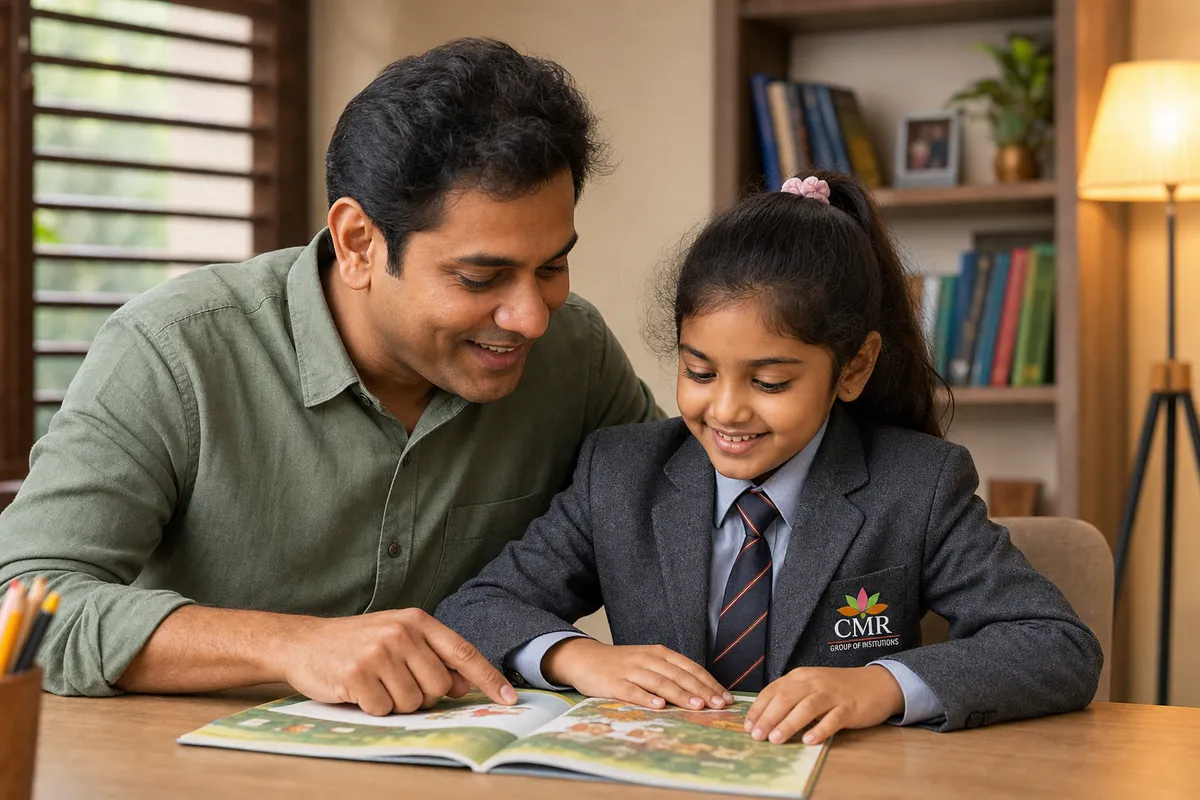
Nurturing connection through conversation — a parent and child sharing a quiet moment of reading and dialogue at home.
When a child comes home from school, the typical interaction often sounds like a checklist: "How was your day? Do you have homework? Did you finish your lunch?" While these questions are well-meaning, they rarely lead to meaningful dialogue. By practicing active listening for parents, we can transform these exchanges into moments of deep trust and connection, building a solid foundation for healthy parent-child communication.
What is Active Listening and Why is it Essential?
Active listening means listening to understand, not just to respond. It involves paying full attention, reflecting feelings, and suspending judgment. For children, being listened to actively sends a powerful message: "Your thoughts and feelings matter." This realization is the cornerstone of building emotional connection and healthy self-worth.
How CMR School Encourages Communication Skills
At school, we teach children how to express their ideas and listen to others. Here are the methods we use:
1. Circle Time Sharing
Students take turns sharing their experiences while their classmates listen without interruption, teaching children how to pay attention and show respect to peers.
2. Restorative Dialogue
During disagreements, teachers guide students to explain their feelings and repeat back what they heard from the other person, building perspective-taking skills.
3. Collaboration and Teamwork
Our group projects are structured to ensure every student's ideas are discussed and integrated, showing children that collaborative work requires listening.
4. Emotional Literacy Programs
We help students name their feelings, making it easier for them to communicate their internal experiences clearly at school and at home.
Practical Strategies of Active Listening for Parents
You can incorporate active listening into your daily routine with a few deliberate habits. When your child wants to talk, put down your phone, make eye contact, and get down to their eye level. Reflect on their feelings rather than immediately offering advice: if they complain about a friend, say "It sounds like you felt really hurt by that," which shows you understand. Avoid interrupting or dismissing their worries, no matter how small they seem to you. Use open-ended prompts like "Tell me more about that" to show you want to hear their full perspective.
Conclusion
Listening is the ultimate act of love. When we listen to our children with our full attention, we create a secure space where they feel safe to share their successes, fears, and dreams. At CMR School, Lalgadi Malakpet, we believe that strong parent-school partnerships and open communication are the best ways to support every child's growth.
Enquire About Admissions 2026-27 — CMR School, Lalgadi Malakpet
Admissions are open for the academic year 2026-27 (Nursery to Class VIII). Book your campus visit or fill out an online enquiry today.
Apply Now →Frequently Asked Questions (FAQs)
1. My child only gives one-word answers when I ask about school. What should I do?
Avoid broad questions like "How was your day?" Instead, ask specific, open-ended questions like "What made you laugh today?" or "What was the most interesting thing your teacher said?" This makes it easier for them to share details.
2. How does active listening help reduce behavioral issues?
Many behavioral outbursts are attempts to communicate frustration, hurt, or worry. When children know they can share their feelings and be heard calmly at home, they are less likely to act out to get attention.
3. How do I practice active listening when my child is throwing a tantrum?
Stay calm. Do not try to reason with them when they are highly emotional. Keep them safe, and say: "I see you are very angry right now. I am here with you, and when you are ready, I want to listen to what is bothering you."
4. Does active listening mean I have to agree with everything my child says?
No. Listening is about understanding their feelings, not agreeing with their actions or demands. You can say: "I hear that you really want to stay up and play, but it is bedtime because your body needs rest." This validates their desire while maintaining limits.
Estimated read time: 5 minutes