Nurturing Curiosity in Early Learners: The Power of Questioning
By CMR School, Lalgadi Malakpet
A child's early years are defined by an endless stream of "why," "what," and "how." At CMR School, Lalgadi Malakpet, we believe that these questions are not distractions, but the foundation of lifelong learning and cognitive growth.
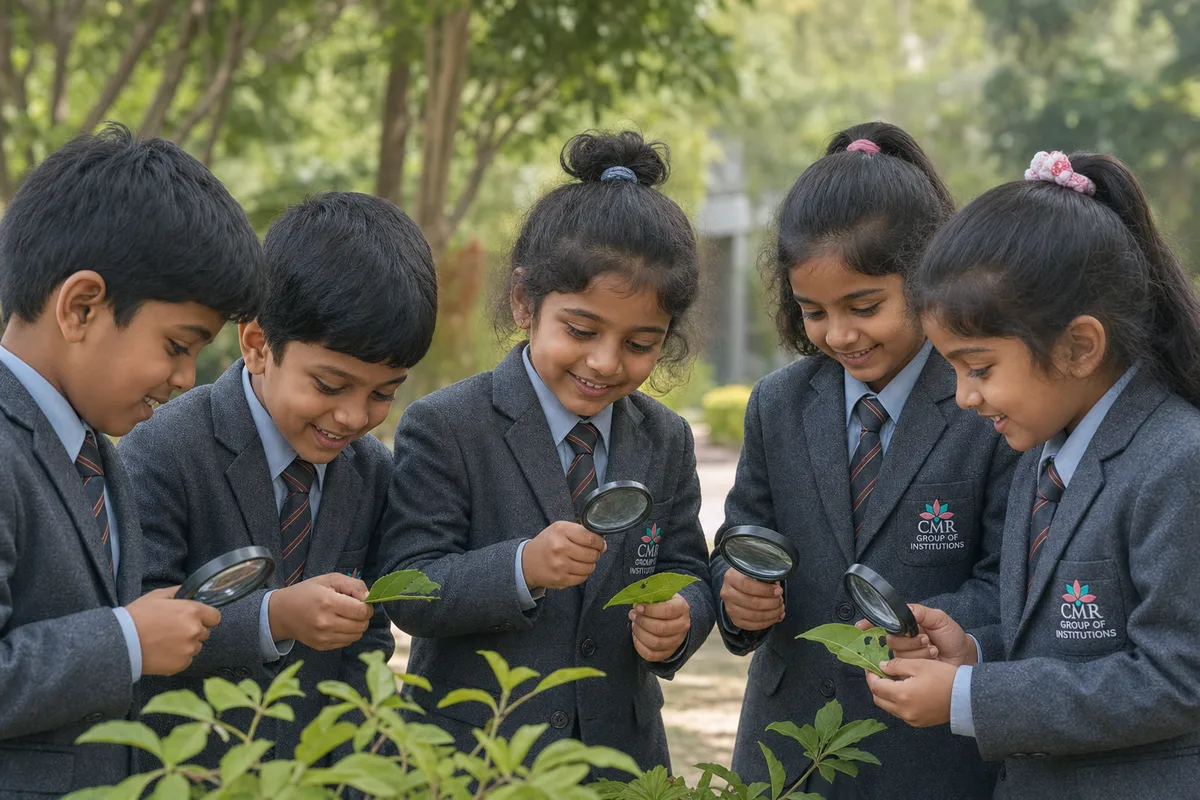
Nurturing young minds through wonder — students exploring nature-based science at CMR School, Lalgadi Malakpet.
Every parent knows the experience of being peppered with questions by a toddler. While it can sometimes feel overwhelming on a busy day, this natural inquisitive drive is the engine of early childhood development. When we encourage children to ask questions, we help them make sense of the world, build critical thinking skills, and lay the groundwork for academic success in their future CBSE curriculum.
Why Questioning is Vital for Early Years Learning
When young children ask questions, they are actively constructing knowledge rather than passively receiving information. This process is crucial for cognitive mapping. By exploring why leaves change color or how rain falls, they build logical pathways in their minds. For parents, understanding this is key to supporting early years learning at home.
How CMR School Fosters Curiosity in the Classroom
At our campus, our educators are trained to validate and expand on every child's question rather than dismissing it. Here is how we implement this philosophy daily:
1. Creating an Inquiry-Rich Environment
Our classrooms are filled with tactile learning aids, books, and nature corners that prompt children to observe and wonder. We design our spaces to ensure children feel safe to ask anything.
2. The "I Wonder" Wall
We dedicate space in our pre-primary classrooms where students can draw or post questions they want to explore. These questions often become the basis for our weekly group discussions and projects.
3. Hands-On Exploration Sessions
Rather than simply telling students how a seed grows, we have them plant seeds and ask them to hypothesize what will happen next. This active participation turns abstract concepts into real-world discoveries.
4. Encouraging Peer-to-Peer Questioning
We teach children to ask each other questions during group work, helping them learn to view problems from multiple points of view and build essential collaboration skills.
How Parents Can Nurture Curiosity in Children at Home
You don't need a teaching degree to keep your child's curiosity alive at home. Start by shifting from answering questions directly to asking back: "What do you think makes that happen?" Set aside time for open-ended exploration, like walks in the park, where the main goal is simply to observe and discuss the surroundings. Show your child that not knowing everything is okay—learning together is a fun adventure.
Conclusion
Curiosity is the spark that makes learning feel like play. By welcoming questions at school and at home, we help children grow into confident, independent thinkers who are ready to explore the world. At CMR School, Lalgadi Malakpet, our inquiry-based pre-primary programme is designed to keep that spark burning bright.
Enquire About Admissions 2026-27 — CMR School, Lalgadi Malakpet
Admissions are open for the academic year 2026-27 (Nursery to Class VIII). Book your campus visit or fill out an online enquiry today.
Apply Now →Frequently Asked Questions (FAQs)
1. How can I encourage a shy child to ask more questions?
Create a safe, low-pressure environment at home. Read stories together and ask open-ended questions like "How do you think this character feels?" to gently invite their thoughts without making them feel put on the spot.
2. Why is inquiry-based learning important in a CBSE school Lalgadi Malakpet?
The CBSE board is increasingly focusing on competency-based education and analytical thinking. Involving children in inquiry-based learning early prepares them to solve real-world problems and succeed under modern exam standards.
3. How do teachers handle questions they don't know the answer to?
Our teachers use these moments as powerful learning opportunities. They say, "That's a fantastic question! I'm not sure, let's look it up and find out together." This teaches children that learning is a lifelong process.
4. At what age does questioning peak in children?
Questioning typically peaks between the ages of 3 and 5, as language skills develop rapidly and children begin to understand that others possess information they do not yet have.
Estimated read time: 5 minutes