Fostering Empathy and Kindness: Building a Compassionate Classroom Culture
By CMR School, Lalgadi Malakpet
Academic grades represent only one dimension of a child's education. At CMR School, Lalgadi Malakpet, we believe that emotional intelligence and kindness are just as fundamental to future success as mathematics and science.
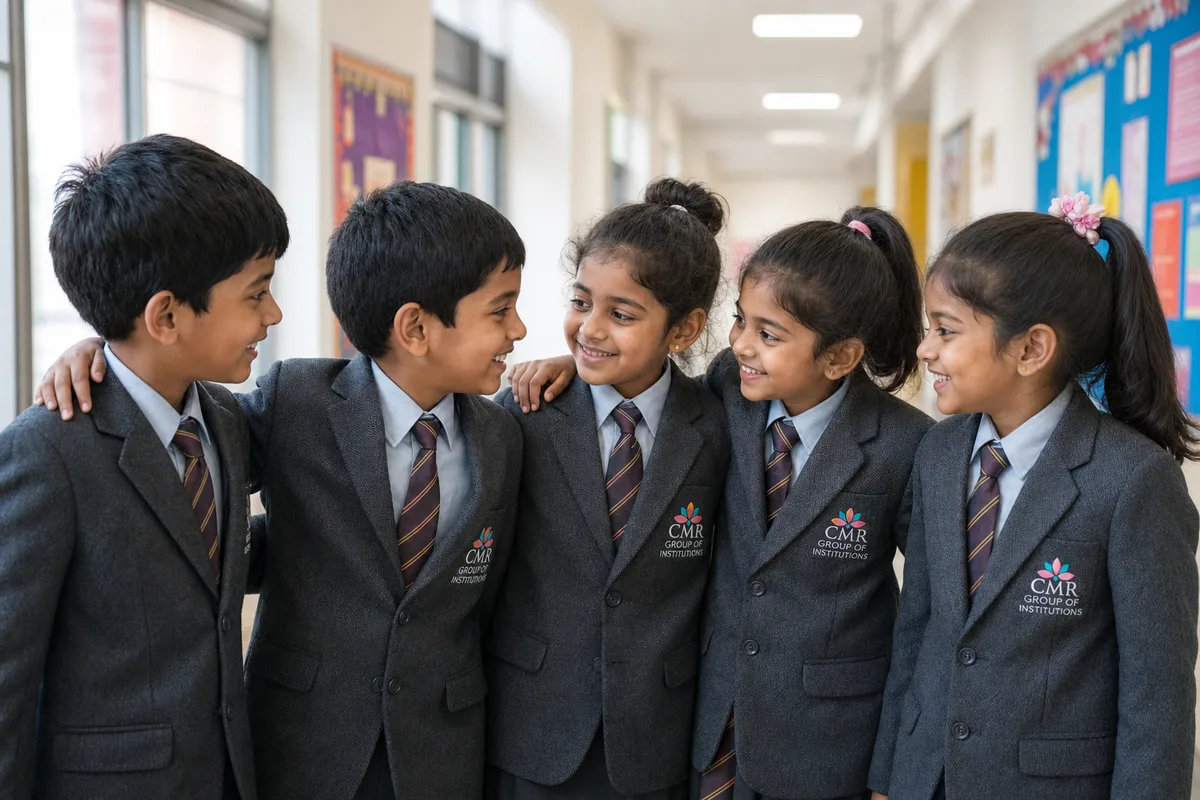
Growing together in kindness — students sharing ideas and helping peers in a collaborative workshop at CMR School.
In a world that increasingly emphasizes competition, teaching empathy to kids has become a vital responsibility for both parents and educators. Empathy is not a passive personality trait; it is a skill that can be practiced, nurtured, and strengthened. By building a compassionate classroom culture, we create a safe environment where children can learn, grow, and develop the social-emotional resilience to navigate life's challenges.
Why Empathy is the Foundation of Learning
A compassionate classroom is directly linked to better learning outcomes. When children feel emotionally secure and respected by their peers, their minds are free to focus on academic concepts. Empathy reduces bullying, lowers anxiety, and increases participation, making it a critical focus area among top CBSE schools Shamirpet.
Our Methods to Build a Compassionate Classroom
We build community deliberately. Here are the core pillars we use to weave empathy and kindness into daily campus life:
1. Restorative Circles and Daily Check-Ins
Every morning, students gather in a circle to share their feelings and talk through problems. This practice helps children see their classmates as individuals with their own struggles and joys.
2. The "Kindness Catchers" Initiative
We encourage students to call out acts of kindness they observe. When a student helps another clean up a spill or shares a book, it is recognized, reinforcing that kindness is highly valued on our campus.
3. Service-Learning Projects
We connect classroom learning with community service. By organizing clean-up drives, visiting elderly homes, or collecting books for underprivileged children, students practice real-world empathy.
4. Storytelling with Emotional Depth
During literature lessons, our teachers go beyond plot summaries. We discuss the characters' feelings, asking questions like "Why do you think he felt left out?" to build perspective-taking skills.
How Parents Can Support Empathy Development at Home
Empathy is caught, not just taught. Children watch how their parents treat delivery executives, neighbors, and family members. Use everyday moments to talk about feelings: if a sibling is upset, ask "How do you think we can help them feel better?" Reading together is also a great opportunity to build emotional vocabulary. Simply naming feelings—like frustration, pride, or worry—helps children recognize them in themselves and others.
Conclusion
When we prioritize teaching empathy to kids, we prepare them to be not just high achievers, but constructive, thoughtful members of society. At CMR School, Lalgadi Malakpet, we are proud to foster a compassionate classroom culture that supports every student's heart and mind.
Enquire About Admissions 2026-27 — CMR School, Lalgadi Malakpet
Admissions are open for the academic year 2026-27 (Nursery to Class VIII). Book your campus visit or fill out an online enquiry today.
Apply Now →Frequently Asked Questions (FAQs)
1. Is empathy something that can actually be taught in school?
Yes. Just like reading or math, emotional intelligence can be developed. Through structured group discussions, cooperative games, and role-playing, schools can teach children to recognize feelings and respond with care.
2. How does a compassionate classroom help with academic performance?
When students feel safe and supported, their stress levels drop. Lower stress allows the brain to process information more effectively, leading to improved concentration, memory, and performance in CBSE schools Shamirpet.
3. What should I do if my child struggle to share or show kindness?
Be patient. Empathy develops in stages. Model kind behavior, praise cooperative efforts rather than demanding sharing, and help them label their difficult emotions like "I know you want to keep playing with that toy."
4. How do teachers handle conflicts using empathy?
Our teachers use restorative justice practices. Instead of immediately assigning blame, we ask both parties: "What happened?", "How did that make you feel?", and "What can we do to make things right?" This builds mutual understanding.
Estimated read time: 5 minutes